
Pieces of the Truth
Decoupling Motive from Action in Season 2,
Synopsis
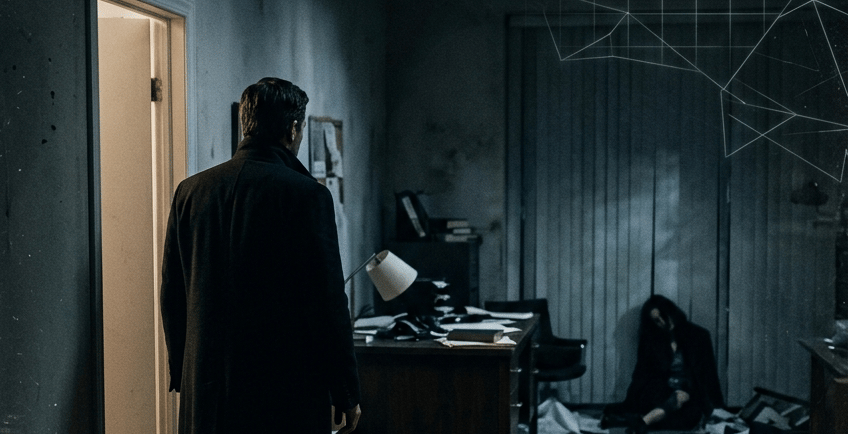
The door opens.
Jasmine doesn’t turn.
“What do you want?”
Cut to black.
Jill Lunden is speeding through the night, shaken, admitting that something has already been set in motion—and that she can’t believe what she’s done. Flashbacks reveal a decision made earlier that night: something had to be finished before morning.
Tracy burns documents in a fire pit, emotionally unraveling as she insists she never wanted to “erase” someone. Earlier, she had committed to intercepting Jasmine.
Bill Neilson drinks alone, casually noting how easy it was to bypass his Secret Service detail. In a flashback, he warns Jasmine to stay quiet—his tone leaving open whether it was concern or threat.
President William Chavez sneaks back into the White House, only to be confronted by his wife. Earlier, he had made it clear that Jasmine needed to be silenced—and now claims she is no longer a problem.
Morgan Thompson scrubs her hands obsessively, haunted by what she and Daniel have set in motion. She promises that Jasmine is about to learn just how dangerous they are.
The next morning, Jasmine’s aide arrives at work, replaying his warnings to her. She had a plan—one she refused to abandon.
He enters her office.
It’s cold. Disordered. Wrong.
Jasmine is—
dead.
Analysis
Season 2 shifts the story from rising tension to full consequence.
If Season 1 introduced the players and the dangers surrounding them, this episode detonates everything that has been building beneath the surface. Jasmine Cortez was not just a political figure—she was a catalyst. Her actions forced every major character into a position where silence was no longer an option.
What makes this structure effective is that the episode does not present a single clear antagonist. Instead, it constructs a web of intent. Each character is shown crossing a line—morally, politically, or personally—before the audience even knows the outcome.
The use of fragmented flashbacks reinforces a central theme: truth is not presented cleanly. What we see are pieces—decisions, threats, moments of fear—but not the full sequence of events. This keeps the audience in a constant state of evaluation rather than passive observation.
The result is a narrative where the question is not simply what happened, but who followed through.
Relationship to the Books and Previous Episodes
This episode directly continues the events of Episode 6, where multiple storylines converged around Jasmine’s investigation into the Breckindale project.
By that point:
Jill is desperate to avoid a repeat of the personal and political fallout that nearly destroyed her family.
Bill is guarding a secret that could have devastating consequences if exposed.
William is balancing political survival with increasingly ruthless decision-making.
Daniel and Morgan are engaged in financial fraud, with plans to shift blame if necessary.
Jasmine’s role as an aggressor—someone willing to push boundaries and expose truths—places her in direct conflict with every one of these characters.
Her office later becoming a museum in Insurrection reinforces the significance of this moment. Her death is not an isolated घटना—it is a turning point that reshapes the narrative landscape of the series.
Critical Thinking
1. Motive vs. Opportunity
Every major character has a reason to want Jasmine silenced. However, motive alone is not enough.
Who had the clearest path to act?
Who benefits the most from immediate action versus delay?
Are the most obvious suspects too obvious?
Understanding the difference between wanting something to happen and making it happen is key to analyzing this episode.
2. Reliability of Perspective
The episode relies heavily on flashbacks—but these moments may not represent objective truth.
Are these memories accurate, or are they shaped by guilt and justification?
Do the characters remember events as they happened, or as they need them to have happened?
If multiple people recall threatening Jasmine, does that indicate action—or shared fear?
The audience is not simply watching events unfold—they are being asked to question the validity of what they are shown.
Because when everyone has something to hide… the truth becomes the most dangerous secret of all.